Beyond the Price Tag: Why Sunyani’s Real Estate Boom Demands Smarter Architecture
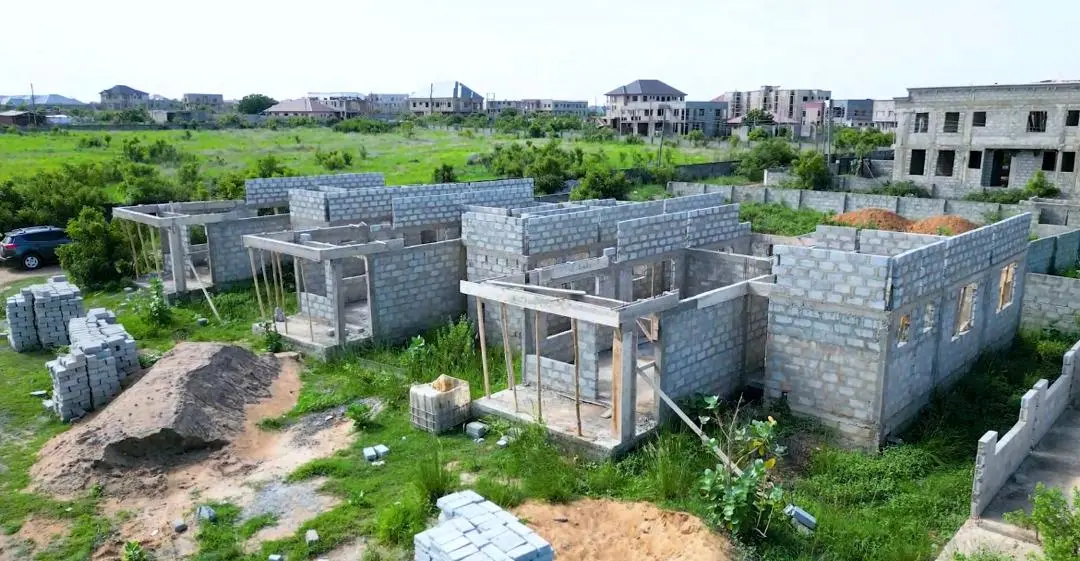
If you’ve looked at land or property prices in Sunyani recently, especially around Berlin Top, Fiapre, or the Ring Road corridor, you’ve likely felt the sticker shock. The conversation dominating the local market right now is singular: why is real estate in the Bono capital suddenly getting so expensive?
Driven by diaspora capital, a booming student population, and Sunyani’s well-earned reputation as one of Ghana’s most liveable urban centres, premium land values are climbing fast. But a rising price tag is only half the story. The real challenge facing modern homeowners isn’t just what it costs to acquire space in Sunyani. It’s what we choose to build on it.
When square meterage becomes a premium commodity, every single line on an architectural drawing has to work harder.
The old way of building; sprawling, inefficient floor plans, arbitrary site orientations, construction by guesswork is no longer sustainable. This piece breaks down the forces driving Sunyani’s property boom, and shows how intentional architecture can turn an expensive piece of land into a high-yielding, future-proof asset.
What's Driving Sunyani's Real Estate Prices?
For years, the Bono regional capital was celebrated primarily for its calm, orderly streets and affordable cost of living. Today, it is one of the fastest-growing real estate markets in the country. This appreciation isn’t a temporary bubble, it’s the direct result of three converging forces.
1. The Institutional Anchor
The single largest catalyst is the explosive growth of Sunyani’s tertiary institutions. The expansion of the University of Energy and Natural Resources (UENR), the Catholic University of Ghana in Fiapre, and Sunyani Technical University has introduced thousands of new residents to the city every year. The result: an unrelenting, high-yield demand for student hostels and staff apartments. Areas like Fiapre, Dumasua, and the Abesim stretch, once quiet and secondary, now command prices that reflect their commercial rental potential.
2. The Diaspora and “Buy-and-Hold” Capital
Sunyani’s reputation as one of Ghana’s cleanest and most liveable cities has caught the attention of international buyers. For diaspora investors looking to deploy capital without the traffic and saturated prices of Accra or Kumasi, Sunyani is a premier alternative. Premium plots in sought-after neighbourhoods like Berlin Top and Abesim are being bought and held for long-term appreciation or future retirement homes. Because this land is being withdrawn from active supply, available high-tier residential plots have shrunk and prices have climbed for everyone else.
3. The “Litigation-Free” Premium
Every seasoned developer in Ghana knows: the raw cost of land is only part of the equation. The real cost lies in securing peace of mind. As urban expansion pushes into newly mapped areas, buyers are paying a significant premium for land that comes with flawless documentation, verified site plans, and an indisputable clean title. That kind of certainty is finite and its scarcity is pushing the baseline price of premium Sunyani real estate higher every month.
Why Traditional Building Methods Fail the Current Market
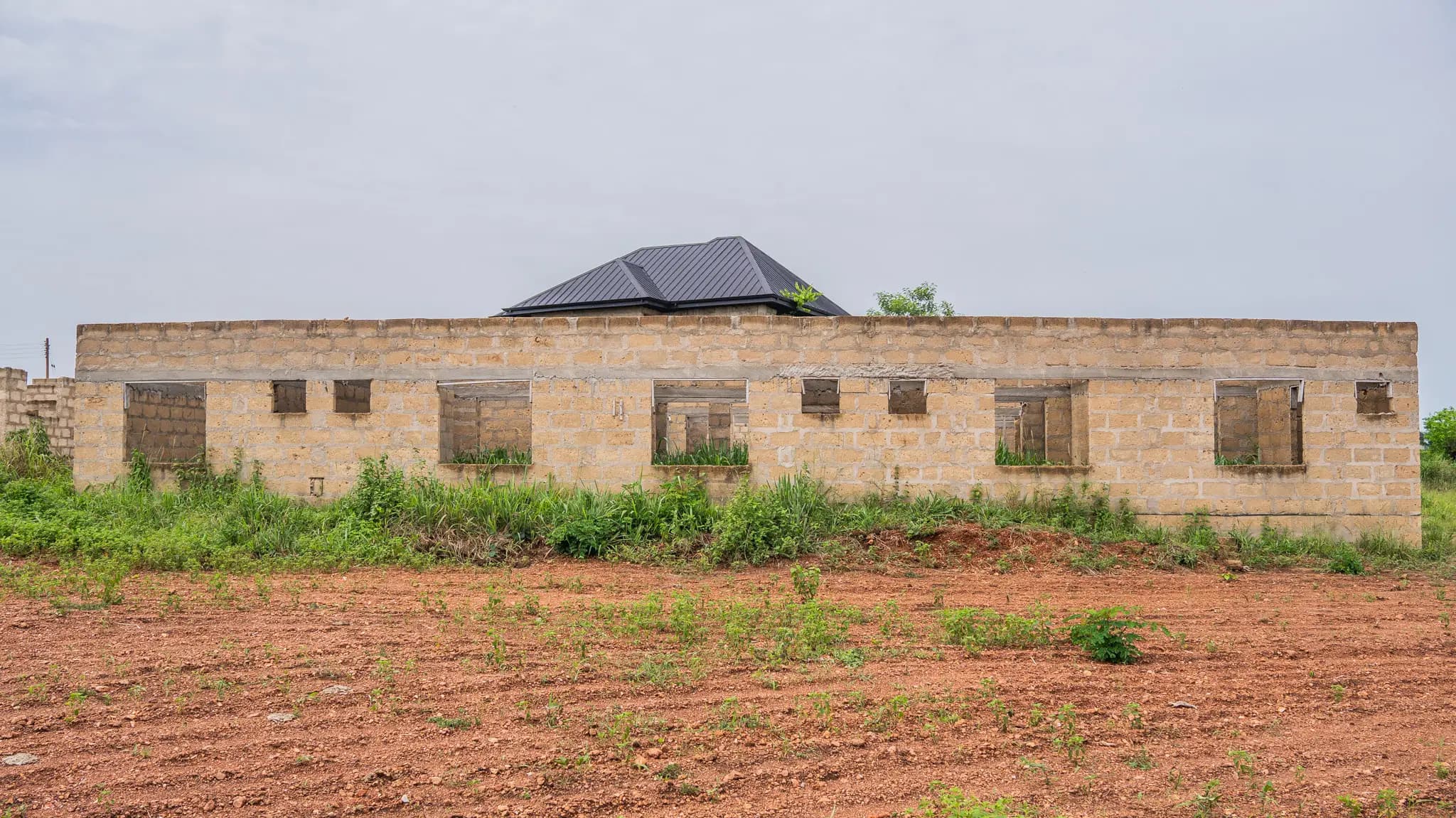
Walk through Berlin Top or Abesim today and you’ll see the same pattern repeating: massive, sprawling foundations of half-completed homes that have been under construction for years. It’s a pattern that has become increasingly common in Sunyani: homes designed for a cheaper era struggling to survive today’s construction realities.
1. Oversized, Underutilized, and Expensive
The conventional Ghanaian residential blueprint has long favoured volume over value, massive corridors, oversized bedrooms, multiple dead spaces that serve no clear daily function. In an era of affordable land and cheap cement, these inefficiencies were easy to ignore. Today, they are financial leaks. Every square metre of dead space requires deep excavation, reinforcement steel, concrete, blockwork, plastering, and finishing. When you build sprawl packed with rooms you only walk through, you are paying premium construction costs for rooms and corridors that contribute little to daily life.
2. The Financial Drain of Structural Inefficiency
A poorly mapped floor plan means longer structural spans, heavier transfer beams, and an unnecessary abundance of columns, all of which bloat your structural budget before you even reach the finishing stage. Because these large footprints demand so much capital upfront, many projects run out of funding mid-blockwork. The owner becomes trapped: tied to an asset that yields zero utility or investment return, simply because the initial layout was too large to execute sustainably.
3. Ignoring the Microclimate: The Hidden Power Bill
Traditional construction in Sunyani frequently treats site orientation as an afterthought. Homes are positioned arbitrarily on the plot, leaving large, unshaded windows facing directly into harsh morning or afternoon sun. Combined with poor cross-ventilation, these buildings become concrete heat traps. Concrete blocks absorb and store thermal energy throughout the day, radiating it back into living spaces long after sunset. The only fix is heavy air conditioning in every room, which turns what should have been a serene sanctuary into a lifelong financial burden of crushing monthly electricity bills.
In a premium land market, wasting square meterage is an expensive mistake. In a climate like Sunyani’s, a house that handles heat poorly becomes expensive to live in very quickly.
Offsetting High Land Costs with Intelligent Architecture
The economics of building in Sunyani have changed. Architecture has to respond accordingly. High real estate costs don’t require you to scale down your vision or build a cramped, uninspiring home. They require the elimination of waste and design with absolute precision.
1. Maximizing the Footprint through Spatial Intelligence
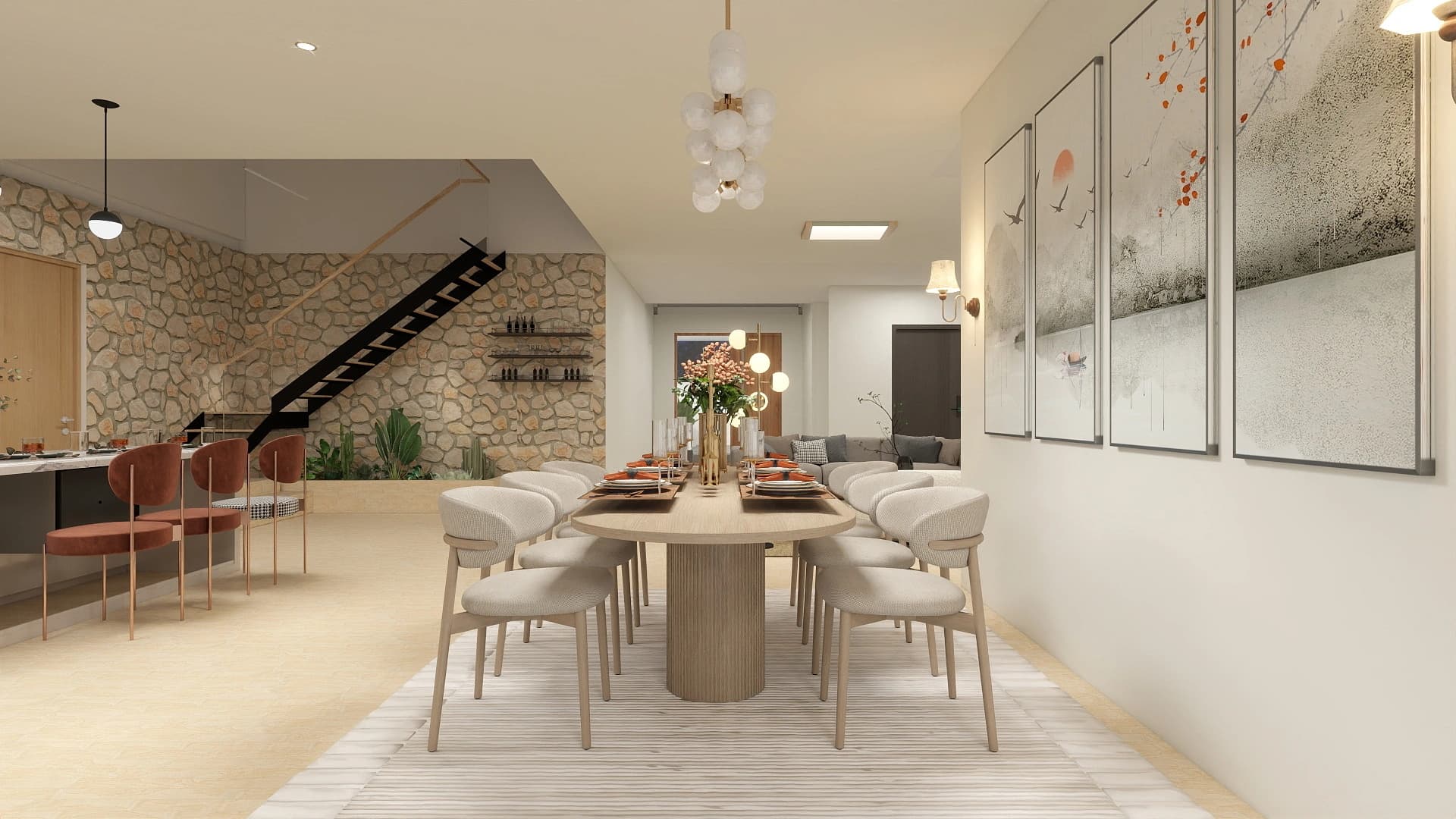
Our design philosophy draws on Scandinavian minimalism and Japandi influences, styles rooted in clean lines, natural warmth, and exceptional spatial efficiency. By replacing dark corridors and rigid, compartmentalised rooms with fluid open-plan layouts, a compact footprint can feel vastly more expansive than a sprawling traditional build. Every zone is engineered for multi-functionality. Storage is integrated invisibly into the architectural fabric. Structural spans are optimised so that light and air move freely. On a premium Sunyani plot, this approach doesn’t reduce comfort. It prioritises the spaces that matter most.
2. Designing for Passive Cooling
A beautifully designed home must be an effortlessly liveable one. Instead of fighting Sunyani’s tropical climate with power-hungry mechanical cooling, we engineer the architecture to regulate itself. Every Pen Homes project begins with a precise site analysis, auditing the exact orientation of the plot to shield interior living spaces from direct solar radiation while aligning openings to capture prevailing breezes. Using the stack effect, where warm air is drawn upward and vented through high-level openings, we create continuous natural air movement. The result: interior spaces that remain naturally cool, without the operating cost of HVAC running in every room.
On the Solstice House - our landmark 120 x 90 ft two-storey project - this analysis revealed that the site faced true East, not South as initially modelled. An East-facing facade is hit by low-angle morning sun, creating intense thermal gain and glare that a South-facing overhang strategy would have completely missed. We caught it before a single block was laid, redistributed the glazing strategy, and realigned the window placements to the true local breeze corridors. That single correction eliminated an entire mechanical cooling load.
The stack effect is not aesthetic theory. It has measurable consequences for comfort, airflow, and long-term energy use.
3. The Aesthetic of Restraint: Creating Value through Materiality
True luxury is not about decorative excess or empty rooms. It is about the mastery of volume, light, and material honesty. Consider what this looks like in practice: a living room where the ceiling climbs to 3.6 metres, drawing the eye upward and outward to a private garden view. Walls finished in a deep basalt lime wash that shifts in tone as the afternoon light moves across them. Built-in shelving that disappears into the architecture rather than standing in front of it. A single bronze pendant above the dining table that anchors the entire room without competing with anything else.
This is how a 180 sqm home on a premium plot can feel more expansive, more private, and more refined than a 400 sqm traditional build on the same street. The value is not in how many blocks you stack, it is in how precisely and beautifully those blocks are put together.
Eliminating the “Try-and-Error” Tax
In traditional Ghanaian construction, there is a hidden expense that quietly inflates project budgets by 20 to 30 percent. Call it the Try-and-Error Tax: the cost of tearing out a newly laid wall because a pipe was forgotten, re-routing electrical conduits on the fly, or discovering mid-build that the staircase headroom doesn’t work. When material prices fluctuate and land in Sunyani is at an all-time premium, guessing your way through a build is not just inefficient. It is financially ruinous.
1. Where Construction Overruns Actually Start
Most overruns don’t begin on the job site, they begin on the drawing board. A basic two-dimensional blueprint provides just enough information to secure a building permit, but leaves the complex realities of execution entirely up to interpretation. When plumbers, electricians, and masons work off separate, uncoordinated plans, conflicts are inevitable. The plumber cuts through a structural beam to lay a drain line. The electrician chases deep grooves into a load-bearing wall. Every site mistake is paid for twice, in labour and in material that is growing scarcer and more expensive every month.
2. Building it Digitally First
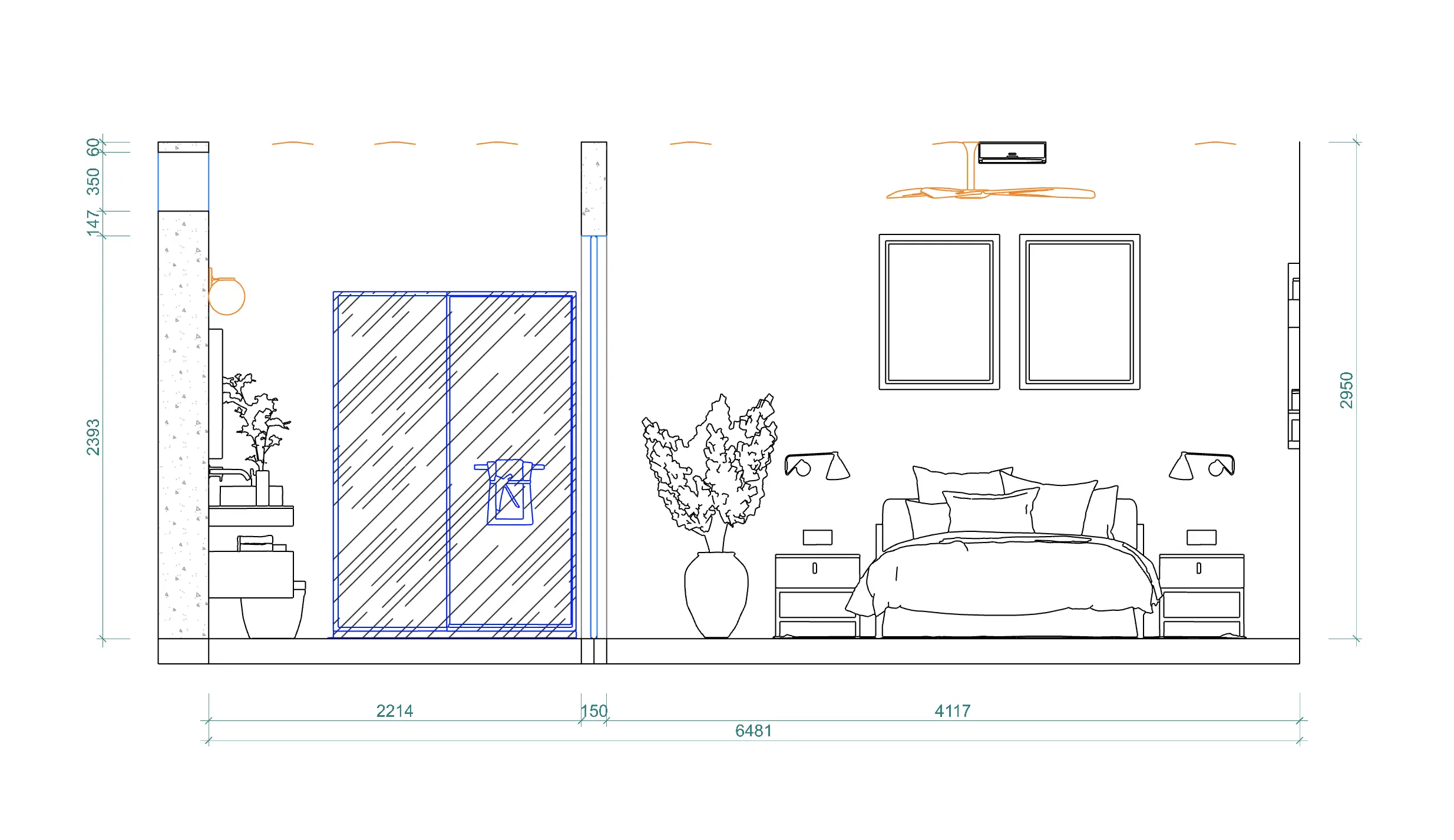
Before a single shovel touches the soil on a Pen Homes project, the entire structure is built, simulated, and stress-tested inside a virtual environment. We merge architectural design, structural engineering, and MEP (Mechanical, Electrical, Plumbing) systems into a single unified digital model. Every conduit run, structural load, and hidden automation wire is mapped and checked for spatial conflicts.
On the Solstice House, this process identified the exact routing paths for the hardwired DALI DT8 lighting infrastructure and custom ESP32 smart modules, before the raft foundation was poured. Conflicts between conduit paths and structural beams were resolved digitally, in minutes, rather than with a sledgehammer on-site weeks into the build.
3. Reducing Waste Through Digital Coordination
Because every design is fully quantified before breaking ground, material waste drops to near zero. We know precisely how many blocks, linear metres of cable, and cubic metres of concrete are required, allowing procurement that shields you from sudden local market inflation. The technology is not installed after the house is finished. It is embedded into the structural engineering from the first cast. No retrofitting. No chasing walls. No surprises.
Investing in Value, Not Just Square Footage
The days of evaluating a property solely by its footprint are fading. In a market defined by premium land values and shifting economic realities, true luxury is no longer about size. It is about intelligence. An expensive plot in Berlin Top, Fiapre, or the Ring Road corridor is not a financial constraint. It is an opportunity, if you build it right.
Building it right means a home that stays naturally cool in the Bono heat, dramatically reducing utility bills. It means an optimised floor plan that makes a compact footprint feel boundlessly open. And it means a construction process that eliminates costly site mistakes, delivering absolute predictability from the first digital simulation to the final physical finish.
The most valuable homes in Sunyani may not be the largest ones, but the ones designed to perform well over time.
Build with intention. Live without compromise.
If you own or are eyeing a piece of real estate in Sunyani, don’t let traditional construction methods compromise your vision or drain your budget. We unify forward-thinking architectural design, meticulous digital engineering, and seamless technology integration to build homes that stand the test of time.